club foot horse definition
Most horses only have one club. A club foot is a DEFORMITY and for any horse to win at top level competition it needs every possible advantage and no drawbacks.
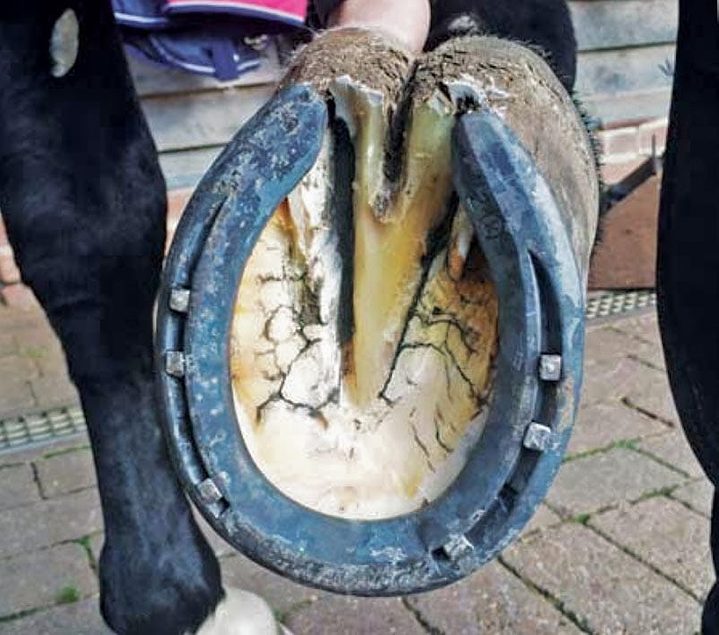
Defining And Fixing A Horse S Club Foot
Club foot is defined by the UC Davis Book of Horses as a flexural deformity of the coffin joint resulting in a raised heel.
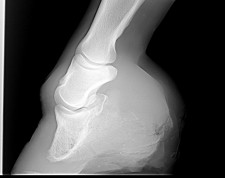
. Club foot case recently. Of club foot A horse with club foot has one hoof that grows more upright than the other. Clubfoot can be mild or severe.
By Heather Smith Thomas. In clubfoot the tissues connecting the muscles to the bone tendons are shorter than usual. The affected hoof is usually stumpy with a short toe and long upright heel.
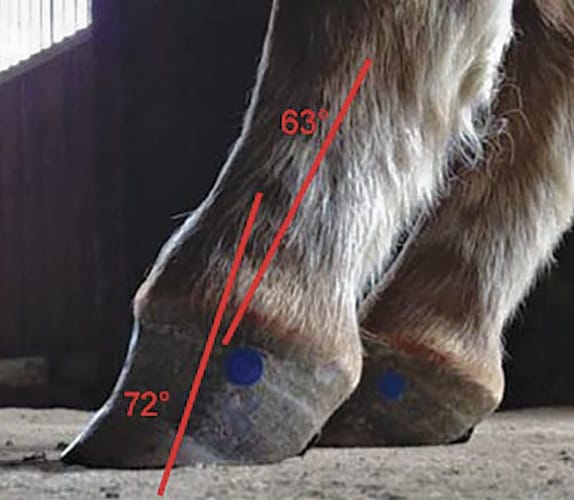
Telltale signs of a club foot may include an excessively steep hoof angle a distended coronary band growth rings that are wider at the heels contracted heels and dished toes. Most horsemen define a club foot as hoof and pastern angle of more than 60 degrees making the foot more upright than normal. A club foot is an upright foot caused by a shortening of the tendon and muscle of deep digital flexor unit.
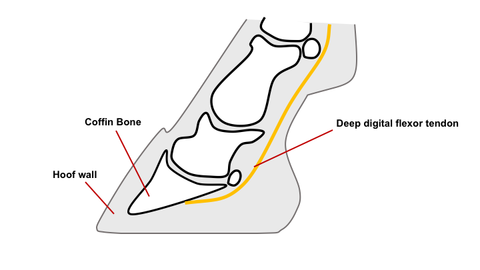
The excessive pull on the deep digital flexor tendon DDFT turns the coffin bone downward loading shifts to the toe area and the hoof changes shape in response. There are four grades of club foot. This horse found it difficult.
Grade 3 club foot has an anterior hoof wall described as dished with the heel twice as wide as the toe. About half of children with clubfoot have it in both feet. There have been some tremendous athletes with a good long career managing very well with some degree of club footedness says Goodness.
Horses affected with club foot develop a flexural deformity of the coffin joint due to a shortening of the musculotendinous unit that starts high up in the limb and inserts on the coffin bone in the foot resulting in an upright conformation of the foot. Club foot is one of the most common deformities in the horse world. A club foot alters a horses hoof biomechanics frequently leading to secondary lamenesses.
Apparently the club foot condition has been with this horse since it was a foal. Characteristics of a club foot are a prominent or bulging coronary band a very upright hoof wall angle a heel that doesnt touch the ground a dish in the hoof wall at the toe growth rings wider at the heel than the toe and other abnormal hoof growth. There is an air gap space between the bottom of the heel and the ground bearing surface- heel does not fully weight bearload on the ground.
What we see externally as the equine clubbed foot is actually caused by a flexural deformity of the distal interphalangeal joint coffin joint. A club foot is a little more serious than just a conformation blemish but doesnt necessarily mean that a horse cant participate in most equestrian activities. Grade 1 Only note a difference in the hoof angles that returns with each trim.
In a normal foot the hoof capsule and the. Club foot can occur before or after birth in foals. Club foot refers to a tendon flaw that causes the hoof to be very upright.
Grade 1 is 3-5 degrees greater than the opposing foot. The only way to stop continuing problems with club footed horses is not to breed from them. Not to be confused with the club foot deformity of humans.
Caused by abnormal contraction of the deep digital flexor tendon a club foot puts pressure on the coffin joint and initiates a change in a hoofs biomechanics. Contracture of the flexor muscles and deep digital flexor back tendon which attaches to the coffin bone inside the hoof results in the. The hoof angle becomes raised and the horse walks on his toe due to a shortening of the musculotendinous unit the unit including.
Grades 1 to 4 as follows. Ance of the foot where there is little expansion of the hoof capsule giving a club-like appearance but this is an overly simplistic definition. Club foot is defined as a flexural deformity of the coffin joint and is a common problem in young growing horses.
Grade 2 Greater difference in hoof angles growth rings begin to change. Clubfoot is a fairly common birth defect and is usually an isolated problem for an otherwise healthy newborn. After birth foals acquire club feet when the bones grow faster than the tendons.
This particular horse a six year old gelding has what I feel is a grade three club foot on a 1-5 scale. This is the milder case of club foot. The term club foot actually refers to a congenital defect of the foot and according to The Free Dictionary the medical definition is a condition in which one or both feet are twisted into an abnormal position at birthTrue clubfoot is characterized by abnormal bone formation in the foot In the horse hoof growth is dictated in large part by weight distribution.
The up foot is accompanied by a broken forward pastern that is the hoof is steeper than the pastern Photo 1. A club foot horse is typically recognized and defined as having one front hoof growing at a much steeper angle than the other with a short dished toe very high heels extremely curved wall and straight bars. Often club foot affects both front legs with one being more severe than the other.
Causes include nutritional issues heredity position in the uterus or injury. A horse with a club foot is kind of like a horse in high heels. Grade 2 has a hoof angle of 5-8 degrees greater and the heel will not touch the ground when trimmed to normal length.
The clinical presentation in the horse can range from a mildly upright and a small foot to one that is buckled for-ward with an angle greater than 90 at the distal. The equine club foot is defined as a hoof angle greater than 60 degrees. The condition is most often encountered in young animals and can be either congenital they are.
Club Feet In Foals
Equine Club Foot
Defining And Fixing A Horse S Club Foot

Conformation Clinic Quarter Horse Geldings Horses Quarter Horse Aqha Horses
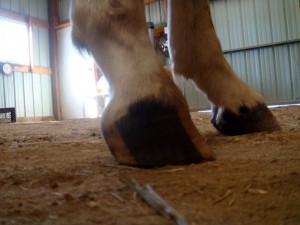
Equine Club Foot
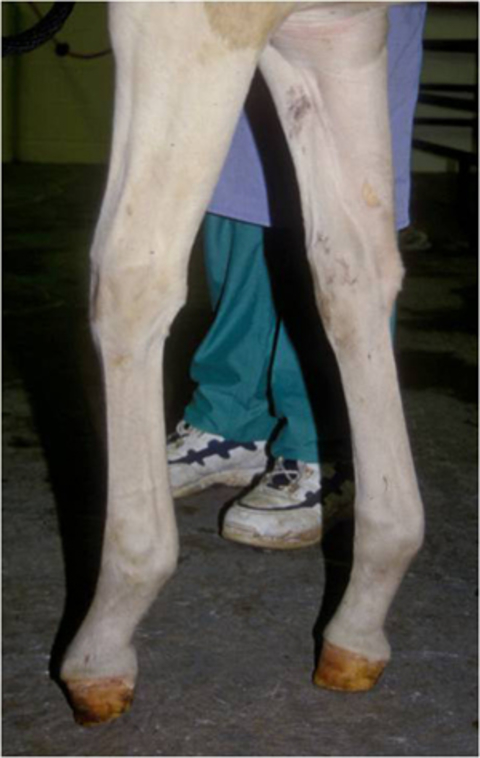
Club Feet In Foals

Evaluating Horse Conformation Publications Horses Horse S Neck Horse Care

Horse Gallops Isolated On White Sorrel Horse Gallops On White Background Aff Isolated Gallops Horse White Horses Horse Galloping Horse Posters
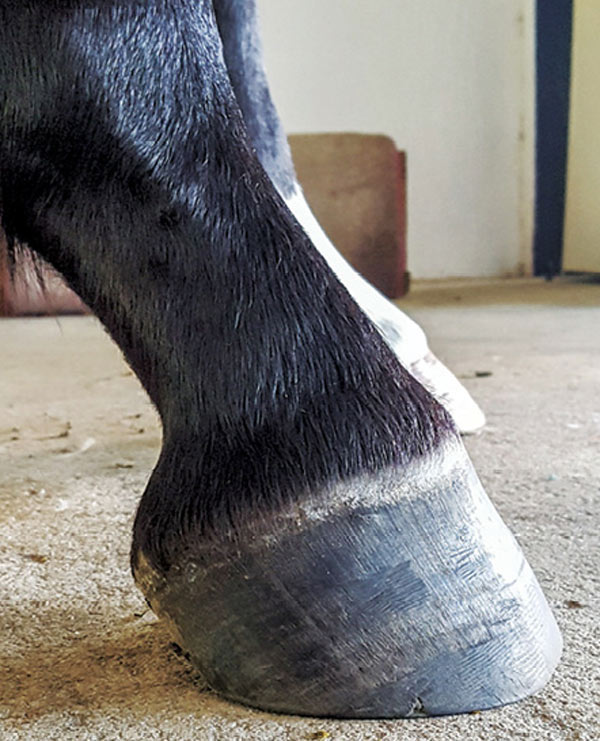
Club Foot Or Upright Foot It S All About The Angles